Foam on foam: when it helps and when it doubles the problem
Yes, you can put a memory foam topper on a memory foam mattress, and whether you should comes down to what is wrong with the bed, not to what the bed is made of. Foam layers compound. They add up in the same direction on the two things foam beds are already worst at: sink and heat.
So there is one complaint where this is the right move and three where it is not.
If the mattress is simply too firm, a foam topper is exactly the fix, and the only thing to manage is the extra warmth. If you already sink too much, another foam layer sinks on top of a bed that sinks, and you get more of the problem you were trying to solve.
If the bed sleeps hot, foam on foam is the worst pairing available, and latex is the honest answer because it is open cell and springs back. And if there is a dip or a sag, no topper of any material fixes it, because that is lost support rather than a surface you can cover.
This is comfort guidance, not medical advice.
We may earn a commission if you buy through the links on this page. How we make money
The two picks, at a glanceWhy foam on foam compounds
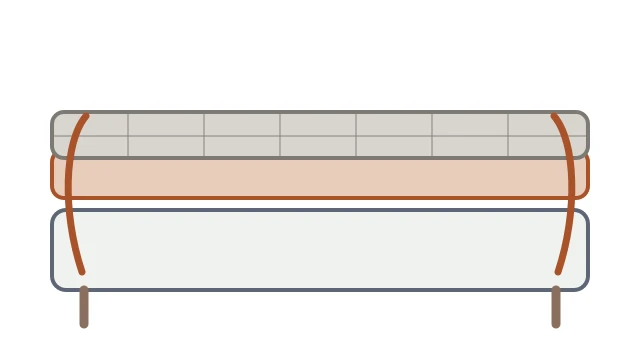
A topper does not replace the mattress under it. You lie on the topper, the topper gives, and then the mattress gives underneath. Whatever both layers do, they do together. That is fine when the two behave differently, and it is the whole problem when they behave the same.
Memory foam has two well known tendencies: it lets you settle into it, and it holds body heat. Put memory foam on memory foam and you get both tendencies twice, in the same direction, with the topper reaching you first. That is why the pairing feels excellent to someone whose bed is too hard, and worse than the bed alone to someone who was already sinking or overheating.
Why foam on foam compounds. A memory foam topper on a memory foam mattress stacks two layers with the same two tendencies: both let you settle in and both hold body heat, so sink and warmth add together, with the topper reaching you first.
That helps when the complaint is a bed that is too firm, because softening is the goal, and makes things worse when the complaint is sinking or overheating, because the topper doubles the exact problem.
A latex topper on the same foam mattress behaves differently, since latex springs back instead of settling and is open cell so air moves through it, so it adds an even, cooler surface instead of more give. Neither fixes a sag, which is lost support in the core rather than a surface problem.
Your complaint, and the honest answer
Find the row that describes why you are looking at toppers. That row is the answer, and the mattress being foam only changes how strongly it applies.
| What is wrong | Foam topper? | Why | What to do instead |
|---|---|---|---|
| The bed is too firm | Yes, this is the case foam is for | Softening a hard surface is exactly what a memory foam topper does, and the mattress being foam changes nothing about that | Heat is the thing to manage, since you are adding a second warm layer |
| I sink in too much | No, it compounds | A foam topper sinks under you and the foam mattress sinks under that, so the two add up in the same direction | A firmer latex layer adds an even surface instead of more give |
| It sleeps hot | No, this is the worst pairing | Memory foam holds heat, and a topper puts a second heat-holding layer between you and the bed | Latex is open cell; a washable cooling cover helps but does not change the fill |
| There is a dip or a sag | No, and neither does any other topper | A sag is lost support in the mattress core, and nothing laid on top restores it | A topper on a sagging bed follows the dip and hides it rather than fixing it |
Material behaviour above is established and consistent with how we describe these materials everywhere else on the site. We give no figure for how far a given topper sinks, because we have measured none, and the honest limit is that two beds of the same description can differ.
When foam is the right answer
One complaint out of the four. If the mattress is too hard and you want the surface softer, adding memory foam is not a contradiction and the bed being foam underneath does not change the logic. The thing to manage is the heat you are adding, so the cooling side of the topper is worth paying attention to here in a way it would not be on a spring bed.
When foam is the right answer: a too-firm foam bed
Sleepyhead Super Topper (Gel and Copper-Infused) with CoolTech 2.0 Cover
2 inch (Twin XL only) or 3 inch, Twin XL to King, gel and copper-infused memory foam
$379 to $649
If your foam mattress is simply too hard, adding foam is not a contradiction, it is the correct fix, and the only question left is which foam.
This is our pick for that case because it is the one topper in the line with a cooling result measured by someone other than the brand: Sleep Foundation rated it 4 out of 5 for temperature control, against 3 out of 5 for the cheaper Gel version.
On a foam-on-foam stack that number matters more than it would anywhere else, because you are adding a second heat-holding layer to a bed that already holds heat. The removable, washable CoolTech 2.0 cover does the rest of that work.
It also has the trial the latex option does not, 100 nights, which is the honest safety net for a pairing you cannot judge until you have slept on it. Corner straps and a non-slip base keep it from drifting on a slick foam surface, and the foam is CertiPUR-US certified and made in the USA.
Keep in mind: It is still foam on foam, so the sink of the two layers adds up and this is the wrong pick if your bed is already soft. Expect the usual memory foam behaviour too: a slow response when you change position, and 24 to 72 hours of airing before the first night.
Best for: A foam mattress that is genuinely too firm, where softening the surface is the goal and heat is the risk to manage.
Key specifications
| Foam | Gel and copper-infused memory foam, made in the USA |
|---|---|
| Thickness | 2 inch (Twin XL only) or 3 inch (all sizes) |
| Cover | CoolTech 2.0, removable and machine washable, OEKO-TEX STANDARD 100 |
| Temperature control | 4 out of 5 (Sleep Foundation testing) |
| Durability | 4 out of 5, 3 to 5 year expected life (Sleep Foundation testing) |
| Trial | 100 nights, free U.S. shipping |
| Warranty | 5 years on the foam, 6 months on the cover |
When the material should change
Two of the four complaints, heat and sink, are the ones another foam layer makes worse. The fix is not a better foam, it is a different material, and latex is the one that behaves in the opposite direction on both counts. Our guide to Dunlop and Talalay latex explains why Dunlop is the firmer, denser of the two curing processes and the one usually used for toppers.
When foam is the wrong material: heat, or a bed that already sinks
PlushBeds Organic Latex Mattress Topper
Soft to Extra-Firm (latex ILD 14 up to 42 or 44), 2 or 3 inch, Twin to Cal King, GOLS-certified Dunlop organic latex
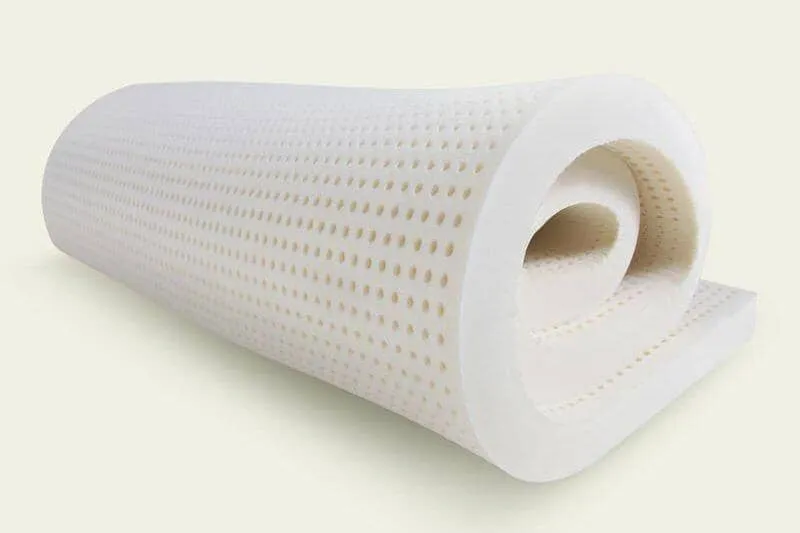
From $204, queen from $316
Change the material rather than adding more of the same. Latex is the honest answer to the two complaints that another foam layer makes worse.
It springs back instead of holding a body impression, so it does not add to the slow sink of the mattress underneath. And it is open-cell, so it does not warm up the way memory foam does or stack a second heat-trapping layer on a bed that already sleeps warm.
PlushBeds sells this one in a genuine firmness range, Soft up to Extra-Firm, stated as latex ILD 14 up to 42 or 44 across the brand's two tables. So a foam bed that has gone slightly soft can be given a firmer, more even surface rather than a softer one.
It is GOLS-certified organic Dunlop latex, also OEKO-TEX and GREENGUARD Gold certified, with a 5 year warranty and a long rated life.
Keep in mind: It is non-returnable (cancel only before it ships), so unlike the foam pick there is no trial to fall back on and the firmness choice has to be right first time. Latex also feels springy rather than contouring, which is a real change if memory foam is what you are used to, and it is heavy to move or rotate.
Best for: A foam bed that sleeps hot or already sinks too much, where adding another foam layer would make the exact complaint worse.
Key specifications
| Material | 100% GOLS-certified Dunlop organic latex |
|---|---|
| Firmness | Soft, Med-Soft, Medium, Firm, Extra-Firm (latex ILD 14 up to 42 or 44 per PlushBeds, whose two tables differ) |
| Thickness | 2 or 3 inch |
| Sizes | Twin to Cal King |
| Warranty | 5 years (lifespan up to 20 years, per PlushBeds) |
| Returns | Non-returnable; cancel before shipment for a full refund |
How thick, and what that changes
Thickness decides how much of the mattress you still feel. On a foam bed that matters more than usual, because the layer you are covering is the soft, heat-holding one.
- 2 inch. Adjusts the surface while the mattress underneath still comes through. The right choice for a small correction to a bed you mostly like.
- 3 inch. Largely takes over the feel of the top of the bed. The right choice when the mattress is far too firm, and the wrong one if you are fine-tuning.
- Thicker is not safer. On a bed that already sinks, a thicker foam topper is more of what is wrong, not a stronger fix.
- Check the sheets before you buy. Two or three inches added to the stack is the most common reason a fitted sheet stops fitting, which our guide to deep pocket sheets covers with a worked example.
What no topper can do
A topper changes comfort, not support. That distinction is the one that decides most disappointed purchases, and it is worth stating plainly on a page about foam beds, because foam mattresses are the ones that tend to develop body impressions.
- It will not lift a sag. A dip is lost support in the core. A topper laid over it follows the shape, hides it for a while and then telegraphs it through. Our guide on toppers and sagging mattresses goes through how to tell the difference between a worn bed and one that is merely soft.
- It will not make a soft bed supportive. Firmer at the surface is not the same as supported underneath, which our firm topper guide works through honestly.
- It will not fix a bed that was the wrong choice. If the mattress has always been wrong for you rather than having aged badly, a topper is a patch, and our guide to whether a topper is worth it covers when to stop patching.
- It does not change how the mattress ages. A topper takes some wear off the surface, but the core underneath keeps doing what it was going to do, and our guide to how long a topper lasts covers the topper's own lifespan.
If you are still deciding between materials rather than between products, our topper guides compare picks by sleep position and by problem, and what a topper actually is covers the basics in one page.
Others we considered
Sleepyhead Gel Topper. The cheaper sibling of our foam pick, same cover and straps, around $80 less at every size. It would soften a too-firm foam bed just as well.
We left it out because this pairing is the one place where cooling is the whole argument, and Sleep Foundation rated the Gel 3 out of 5 for temperature control against 4 for the Super. On foam over foam, that is the difference you feel. Our full Sleepyhead review compares them.
A wool topper. Wool is the other non-foam option and it does breathe, so it fits the heat complaint. We do not name one here because we have verified no wool topper, and this page only points at products whose specifications we have checked ourselves.
Common questions
Can you put a memory foam topper on a memory foam mattress?
You can, and whether you should depends on your complaint rather than on the mattress being foam. If the bed is too firm, a foam topper is the right fix. If you already sink too much or the bed sleeps hot, adding foam makes those exact problems worse, because sink and heat are what foam layers compound. If the mattress sags, no topper fixes it.
Will a foam topper make my mattress hotter?
On a foam bed, usually yes. Memory foam holds body heat, and a topper adds a second layer of it, so you feel the warmth of the topper before the mattress does any work at all. A gel or copper-infused foam with a breathable, washable cover reduces this, and our foam pick is rated 4 out of 5 for temperature control by Sleep Foundation. Open-cell latex avoids it more completely.
Should I use latex instead of foam on a memory foam bed?
If your complaint is heat or too much sink, yes. Latex springs back rather than holding an impression, so it does not add to the slow give underneath, and it does not trap heat the way memory foam does. The trade is feel: latex is springy rather than contouring. If the bed is simply too hard, foam remains the more natural fix.
How thick should a topper be on a foam mattress?
Thicker changes more, in whichever direction the topper goes. A 2 inch layer adjusts the surface while letting the mattress underneath still be felt, which suits small corrections. A 3 inch layer largely replaces the feel of the top of the bed: right if the mattress is far too firm, wrong if you only want small adjustments to a bed you mostly like.
Will a topper fix my sagging memory foam mattress?
No. A sag is lost support inside the mattress, and a topper only changes the surface, so it follows the dip rather than filling it. It can disguise the shape for a while, which is usually why people try it. If the mattress has a visible depression, the honest answer is that it needs replacing, and our guide on toppers and sagging beds goes through how to tell.