Firm mattress toppers: what they can and cannot do
A firm mattress topper is real, but it does less than most shoppers hope. A topper is a comfort layer, so it changes how a bed feels, not how it supports you.
A dense latex or firm high-density foam topper can add a firmer, more even surface and stop you sinking as far, which many people find more comfortable for their back.
What it cannot do is make a soft or sagging mattress genuinely firm again, because that is a support job, and support comes from the mattress rather than a layer on top.
So a firm topper helps when your bed is close to right and you want a slightly firmer feel, and it is the wrong tool when the mattress sags or is worn out.
One honest note up front: the topper we cover in depth, Sleepyhead, is a medium-soft, pressure-relieving topper made to soften a hard bed, so it is not a firm pick.
Can a topper actually be firm?
Most toppers exist to soften a bed, so a genuinely firm one is the exception rather than the rule. The materials that add plushness, standard memory foam, feather and down, are soft by design.
For a firmer feel you are looking at a narrow set: dense Dunlop latex, which is springy and supportive, or a firm, high-density foam. These add a firmer, more even surface and a thin cushion, without the deep sink of a plush topper.
The catch is what firm means here. A firm topper firms the surface you lie on. It does not add structure underneath, so it cannot make a soft or sagging mattress behave like a firm one. If your goal is a firmer bed and the mattress itself has gone soft, the honest fix is the mattress or its foundation, not a layer on top.
How firm each material gets
Firmness comes down to material and density more than to any label on the box. Here is what each one realistically delivers.
| Material | Firmness | Good for | Watch out for |
|---|---|---|---|
| Dunlop latex | Firm | The most genuinely firm, supportive and durable topper option | Heavier and usually the priciest; springy rather than plush |
| Firm high-density memory foam | Medium-firm | A more supportive, even surface with slow contouring | Still softens with time and body heat; can sleep warm |
| Firm-grade polyfoam | Medium-firm | A cheaper way to add a firmer, responsive surface | Lower density can flatten within a year or two |
| Wool | Medium | A light firming and temperature fine-tune, not a big change | Fine-tunes feel; will not turn a soft bed firm |
| Standard memory foam | Soft to medium | Softening a too-firm bed and pressure relief | The opposite of firm; picked by mistake for a firmer feel |
| Feather or down | Soft | A plush hotel-style cushion on top | No firm support at all; the softest option there is |
Thickness matters too, and for firmness it works the opposite way to plushness: a thinner firm topper (2 inches) keeps you closer to the supportive surface, while going thick and soft is what makes a bed feel like it is swallowing you. Our guide on what a mattress topper is has the full position and weight matrix, the RestVerdict topper-fit framework, if you want thickness by body type.
Our firm pick
If you want a topper that is genuinely firm rather than one that just claims to be, the material above points in one direction: dense latex. This is the one we would buy for that job.
We may earn a commission if you buy through the links on this page. How we make money
Our firm pick
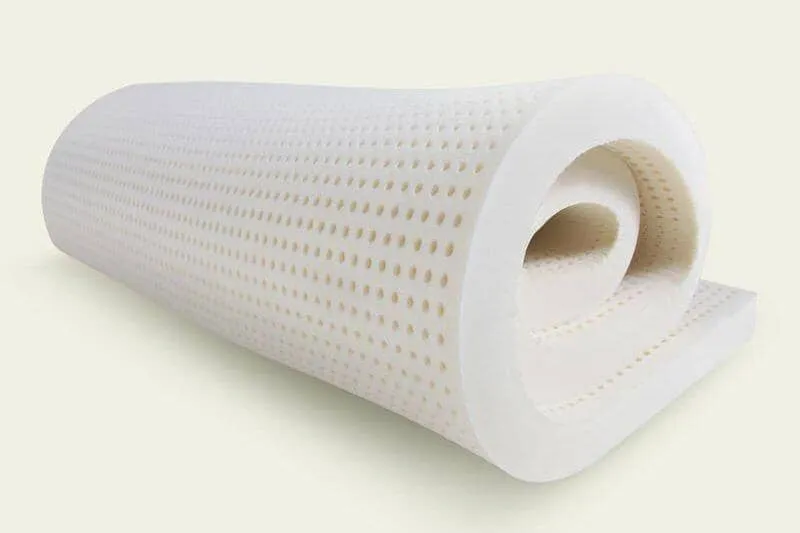
PlushBeds Organic Latex Mattress Topper
Firm and Extra-Firm options (also softer), 2 or 3 inch, Twin to Cal King, GOLS-certified Dunlop organic latex
From $204, queen from $316
This is the topper that actually delivers a firm feel rather than promising one. Dunlop latex is the firmest and most supportive topper material.
PlushBeds sells it in genuinely firm and extra-firm options, latex ILD up to 44, which most toppers labelled firm do not actually offer. So you can add real support to a bed that has gone soft.
It is GOLS-certified organic Dunlop latex with no synthetic foam, also OEKO-TEX and GREENGUARD Gold certified, and it stays responsive and cooler than memory foam instead of slowly sinking.
Durability matches: a 5 year warranty, a lifespan PlushBeds puts at up to 20 years, handmade in the USA. Pick Firm for most beds, Extra-Firm only if you are heavier or want a very solid surface.
Keep in mind: It is non-returnable (you can only cancel before it ships), so the firmness choice has to be right the first time. Latex is also heavy, with a springy feel that is not to everyone’s taste.
Best for: Anyone who wants a genuinely firm, supportive, organic topper and is confident in their firmness choice, since it cannot be returned.
Key specifications
| Material | 100% GOLS-certified Dunlop organic latex |
|---|---|
| Firmness | Soft, Med-Soft, Medium, Firm, Extra-Firm (latex ILD 14 to 44) |
| Thickness | 2 or 3 inch |
| Sizes | Twin to Cal King |
| Warranty | 5 years (lifespan up to 20 years, per PlushBeds) |
| Returns | Non-returnable; cancel before shipment for a full refund |
One honest note, because it is the thing people miss: this topper is non-returnable, so unlike a memory foam topper with a sleep trial, you cannot send it back if the firmness is wrong.
Order Firm if you want solid support, and Extra-Firm only if you are heavier or genuinely want a very hard surface. Shopping specifically for back comfort? Our best mattress topper for back pain weighs this firm pick against a softer option by situation.
Firmness and back pain, honestly
This is the most searched reason people look for a firm topper, so it is worth being careful and plain. What follows is comfort guidance, not medical advice. For persistent or severe back pain, a healthcare professional is the right call, not a bedding page.
The widely shared principle is simple: you want a surface supportive enough to keep your spine roughly neutral, without hard pressure points.
A very soft surface can let the hips sink and the lower back sag out of line, which many people find uncomfortable over a night. A very hard surface can dig in at the shoulders and hips.
Most people land somewhere in the middle, but the right firmness is individual and shifts with your weight and how you sleep.
Where a topper fits into that:
- Mattress a little too soft, back feels unsupported: a firmer topper (dense latex or firm foam) can add a more even, supportive surface. This is the case where firm helps.
- Mattress too hard, pressure at the hips or shoulders: you want a softer topper for cushioning, not a firm one. Reaching for firm here usually makes it worse.
- Mattress sagging or old: no topper fixes lost support. That is covered next.
If you are shopping specifically for this, our best mattress topper for back pain picks a firm-support option and a softer one and shows which situation each suits.
In line with how we write about sleep everywhere on this site, we do not claim any topper treats, relieves or cures back pain. We talk about comfort, support and how a surface feels, and we point you to a professional when the question is medical.
When a firm topper is the wrong fix
A firm topper solves a narrow problem well and gets bought for several problems it cannot touch. Skip it, or buy something else, when:
- The mattress sags. A firm topper masks a mild dip briefly but sinks into it; the support does not come back. See can a topper fix a sagging mattress for the honest stopgap and when to replace.
- The mattress is past about 7 to 10 years. If it is worn out, a topper is money spent to delay a replacement you already need. Our organic latex mattress reviews cover the firm end of that shelf, including which beds let you change firmness after delivery.
- You actually want the bed softer. If a firm bed is causing shoulder and hip pressure, firm is the wrong direction; our mattress topper section and the Sleepyhead review cover softening a too-firm bed.
- You want structural firmness. A slat, board or firmer foundation under the mattress changes support; a comfort layer on top does not. Before spending, our guide on whether a topper is worth it walks through the cheaper fixes to try first.
Quick decision
Match your situation to the row that fits:
- Your mattress sags or is worn out: a topper will not fix it, because that is lost support. Replace the mattress.
- Your bed is a touch too soft and your back feels unsupported: a dense latex or firm-foam topper, 2 to 3 inches, can add a firmer, more even surface.
- Your bed is too hard and you get pressure at the hips or shoulders: you want a softer topper, not a firm one. Firm is the wrong direction.
- You want a slightly firmer feel with minimal change: a thin 2 inch firm topper or dense latex does the least while still firming the surface.
- You are a heavier sleeper: choose denser firm foam or latex so you do not bottom out onto the mattress; a thin plush layer is not enough.
When you are ready to choose, the picks live in our mattress topper section, and the full care and how-to set is in the guides hub. A properly argued multi-pick roundup for back pain is in production; this guide is the reasoning behind it.
Common questions
Can a mattress topper make a bed firmer?
To a point. A dense latex or firm high-density foam topper adds a firmer, more even surface and stops you sinking as far, so a slightly too-soft bed can feel more supportive. What it cannot do is restore lost support: if the mattress has sagged or worn out, the topper contours into the same dip. Firmness of feel, yes; structural support, no.
What is the firmest type of mattress topper?
Dense Dunlop latex is the most genuinely firm and supportive topper material, and also the most durable. Firm high-density memory foam and firm-grade polyfoam come next as medium-firm options. Standard memory foam, feather and down go the other way and are soft, so they are the wrong pick if you are after a firmer feel.
Is a firm or soft topper better for back pain?
It depends on your mattress, your weight and how you sleep. The principle is a surface supportive enough to keep the spine roughly neutral: a very soft one lets the hips sink, a very hard one creates pressure at the shoulders. Too-soft bed, firmer topper; too-hard bed, softer one. This is comfort guidance, not medical advice.
Will a firm topper fix a sagging mattress?
No. Sagging is a support problem and a topper is a comfort layer, so a firm topper can mask a mild dip for a while but sinks into it rather than filling it, and the lack of support returns. Our guide on whether a topper can fix a sagging mattress covers the honest stopgaps and when to replace the mattress instead.
Is the Sleepyhead mattress topper firm?
No. Sleepyhead makes medium and medium-soft toppers built to soften a hard bed and relieve pressure for side sleepers, not to add firmness. If you specifically want a firm feel, it is not the pick. If your actual goal is softening a too-firm mattress, our Sleepyhead review is a worked example of judging one.