Can a mattress topper fix a sagging mattress?
Short answer: mostly no. A topper cannot rebuild support a mattress has lost. At best, a firm one hides a mild sag for a while.
Plenty of pages will tell you a topper is the fix, because they are selling toppers. Here is the honest version. Sagging is a support problem, and a topper is a comfort layer. Put foam over a dip and the foam follows the dip.
What a firm topper genuinely does is stop you feeling a shallow sag for a while. What it does not do is make the mattress support you again.
So before you spend anything, work out which situation you are in: a mild sag on an otherwise sound mattress, where a stopgap is reasonable, or a deep sag on a tired mattress, where the only real fix is a new one.
If you came here looking for the best mattress topper for a sagging mattress, the honest answer is: a firm one, only for a mild sag, and only as a stopgap.
Firmness is the whole point, so the useful question is not which brand but which topper can prove it is firm. We name the one we would pick, and the situations where we would not buy anything at all, in the stopgap section below.
Why a topper does not fix a sag
A mattress does two jobs: it supports your spine and it cushions your pressure points. Support comes from the core and the foundation under it, and when that core softens or breaks down, you get a sag.
A topper only touches the second job, cushioning, and it sits above the problem. Lay it over a dip and it takes the shape of the dip.
That is why a plush topper can even make a sag feel worse: you and the soft foam both sink into the low spot together.
The honest stopgap, if the sag is mild
If the sag is shallow and the mattress is otherwise sound, you can buy some time with a two-part fix, one part for support and one for comfort:
- Support: put a sheet of plywood or a bunkie board between the mattress and the frame, under the sagging area, to create a firmer and flatter base.
- Comfort: add a firm topper on top so the leveled surface feels good. Firm, not plush: a soft topper will just sink into whatever dip is left.
Our guide to firm mattress toppers covers which materials are genuinely firm (dense latex or firm foam, not memory foam), and if the bed underneath is itself memory foam, our guide to stacking foam on foam explains why another foam layer usually deepens the complaint instead of fixing it.
Set your expectations honestly: this levels the surface and stops you feeling a mild sag. It does not repair the mattress, and it does nothing if the core itself has failed. Think weeks or a few months of relief while you plan a replacement, not a permanent cure.
Which firm topper, if you are buying one anyway
Most toppers sold as firm only say so on the label. Firmness in latex is measured as ILD, and that number is the difference between a topper that bridges a shallow dip and one that sinks into it with you.
Very few brands publish it. PlushBeds does, which is why it is the one we point to for this job. It is the same pick as on our firm mattress topper guide, judged there for firmness in general and here for the narrower question of a mild sag.
Do not buy it if any of these are true: the dip is visible when the bed is empty, the mattress is past the usual replacement age, or you wake with back or hip pain that a level surface has not fixed.
In all three cases this is a comfort layer over a support failure, and the money belongs towards the mattress instead. That is not us talking you out of a purchase for effect. It is the single most common wasted spend in this category, and the reason this page exists.
We may earn a commission if you buy through the links on this page. How we make money
If you go the stopgap route
PlushBeds Organic Latex Mattress Topper
Firm and Extra-Firm options (also softer), 2 or 3 inch, Twin to Cal King, GOLS-certified Dunlop organic latex
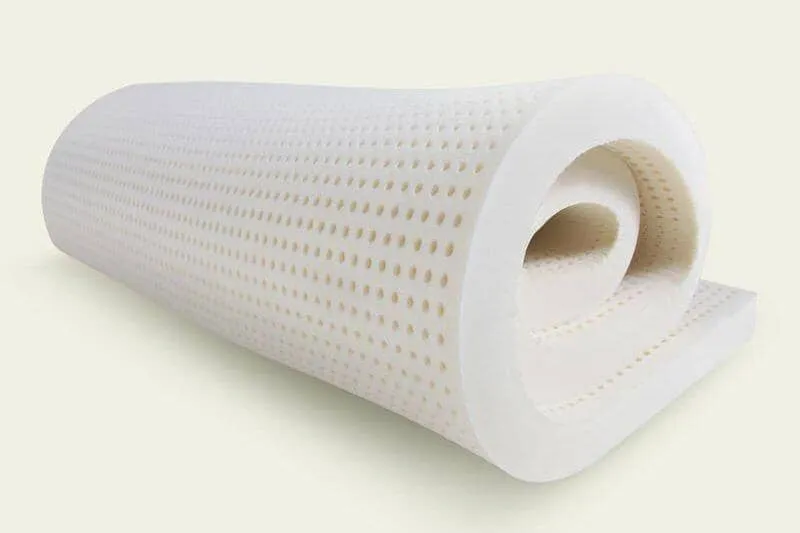
From $204, queen from $316
If you have decided the stopgap is worth it, the topper has to be genuinely firm, and this is the one we can show numbers for.
PlushBeds publishes the latex ILD for each option, 14 for Soft up to 44 for Extra-Firm (a second table on the same page says 40 to 42), which most topper brands never disclose. So you can pick a firmness on purpose rather than by adjective.
Dunlop latex is also the most supportive and least sinking of the topper materials, which is exactly what bridging a shallow dip needs, and it does not slowly settle the way memory foam does.
It is certified (GOLS organic latex, OEKO-TEX, GREENGUARD Gold), handmade in the USA, with a 5 year warranty and a lifespan PlushBeds puts at up to 20 years.
Keep in mind: It levels how the bed feels, not what supports it: if the mattress core has failed, this is money spent on comfort while the real problem stays. And it is non-returnable, which over a sagging bed is a sharper risk than usual, because the depth of a dip is exactly the thing people misjudge.
Best for: A mild sag on a mattress that is otherwise sound, where you want the firmest, most supportive comfort layer available and you are confident about the firmness you need.
Key specifications
| Material | 100% GOLS-certified Dunlop organic latex |
|---|---|
| Firmness | Soft, Med-Soft, Medium, Firm, Extra-Firm (latex ILD 14 up to 42 or 44; the brand’s two tables differ) |
| Thickness | 2 or 3 inch |
| Sizes | Twin to Cal King |
| Warranty | 5 years (lifespan up to 20 years, per PlushBeds) |
| Returns | Non-returnable; cancel before shipment for a full refund |
The catch that matters most here. This topper is non-returnable: you can cancel before it ships, but once it arrives it is yours. On a sagging bed that risk is higher than usual, because how deep the sag really is happens to be exactly the thing people misjudge.
If you are not sure the sag is mild, do not order a topper you cannot send back. For comparison, our Sleepyhead review covers a topper with a 100 night trial, though it is medium-soft and therefore the wrong tool for a sag. That contrast is the trade: a trial period, or a firmness you can verify.
When to stop patching and replace
A stopgap is throwing good money after bad once the mattress is genuinely done. Replace rather than patch if:
- The dip is deep, or you can see a visible valley when the bed is empty.
- You wake with back or hip pain that a leveled surface does not fix.
- The mattress is past roughly 7 to 10 years, where sagging usually means the core is worn out.
- There is more than one sag, or the edges have collapsed too.
A topper on a dead mattress is comfort paint over a structural crack. If you are there, the money is better spent on the mattress.
What if the topper itself is sagging?
Different problem, easier answer. If your topper has developed permanent impressions that no longer spring back, it is simply worn out.
Quality foam or latex toppers generally last around 3 to 5 years; cheap bare-foam pads can flatten within a year, which we break down in how long a mattress topper lasts.
A collapsed topper cannot be revived, so replace it, and rotate the new one head to foot now and then so it wears evenly. Our mattress topper section and the guide on what a mattress topper is and how thick to go will point you to the right one.
If the topper is fine but keeps drifting or lifting at the corners, that is grip, not wear, and how to keep a topper from sliding has the fix.
Common questions
Can a mattress topper fix a sagging mattress?
Not really. A topper cannot add back the support a mattress has lost. It sits on top and contours into the existing dip, so the sag is still under you. A firm topper can stop you feeling a mild sag for a while, but it masks the problem rather than fixing it. If the sag is deep or the mattress is old, it buys a little time at best.
What actually helps a sagging mattress, short of replacing it?
The honest stopgap has two parts. For support, place a sheet of plywood or a bunkie board between the mattress and the frame, under the sagging area. For comfort, add a firm topper on top so you do not feel the dip. Together they level the surface. It is a temporary fix, not a repair, and it works best on a mild sag with a sound support core.
Why does a topper not stop the sagging?
Because sagging is a support problem and a topper is a comfort layer. Support comes from the mattress core and its foundation. When that core softens or breaks down, no amount of foam on top rebuilds it, the foam just follows the same dip. This is the single most common wasted purchase in bedding: buying a topper to fix a sag it cannot fix.
My mattress topper itself is sagging. What do I do?
If the topper has permanent body impressions that no longer bounce back, it is worn out and it is time to replace the topper, not the mattress. Quality foam or latex toppers usually last around 3 to 5 years, while cheap bare-foam pads can flatten within a year. A worn topper cannot be revived, though rotating a new one head to foot regularly helps it wear evenly.
How firm should a topper be for a sagging mattress?
If you are trying to mask a mild sag, go firm rather than plush. A soft, thick memory foam topper will sink into the dip along with you and make the problem more noticeable, not less. A firmer, denser topper bridges a shallow sag better. That said, firmness only helps with feel; it still does nothing for the lost support underneath.